

A missing tooth rarely stays just one problem. The gap shifts how you bite, strains the teeth on either side, and sets off slow bone loss beneath the gumline that most people don’t notice until it’s already changed their face shape. Dr. Robert F. Murray, DDS built Ocean Valley Dental around stopping that process early, using precision surgical techniques, cone beam 3D imaging, and an in-house fabrication lab to deliver dental implants that hold up across decades, not just years.
Mission Viejo CA Dental Implants
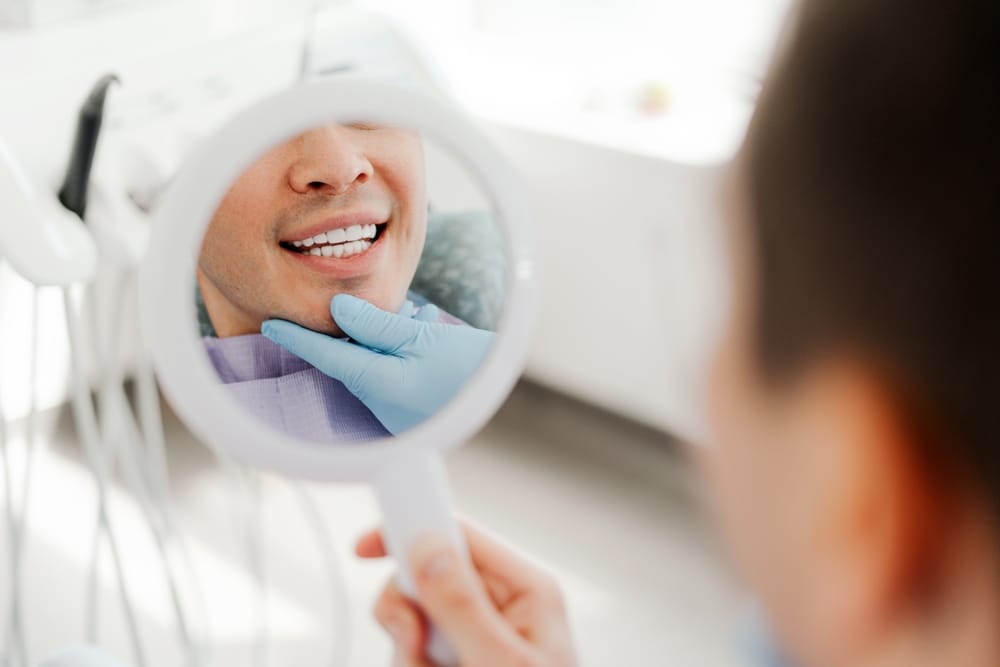

The Real Difference a Root-Level Replacement Makes
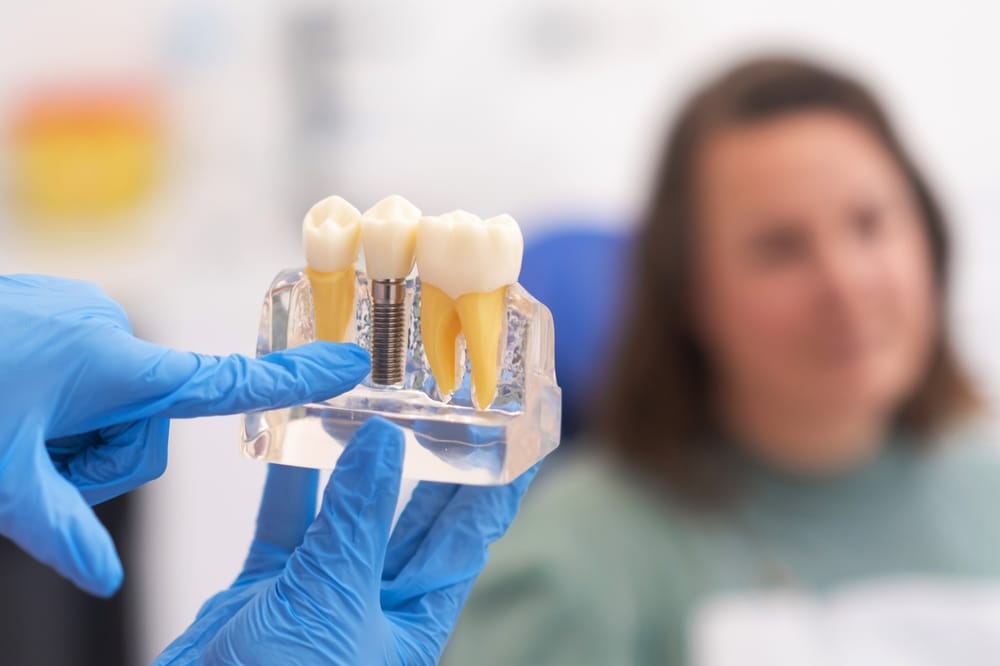
Most prosthetic options address the visible part of a missing tooth. Dental implants address what’s happening below the surface. A small titanium implant post is inserted directly into the jawbone, sitting in the same position a natural root once occupied. Bone tissue attaches to the post’s surface over time, creating a structural bond that no adhesive or clasp can replicate.
This is why implant placement is fundamentally different from other dental treatments: the replacement isn’t resting against your gums or borrowing support from neighboring teeth. It’s embedded in living bones. Chewing pressure stays where it belongs, bone stimulation continues, and the surrounding oral health stays protected.
Benefits of Dental Implants
Your Face Shape Is Protected, Not Just Your Smile
Tooth roots signal the jawbone to maintain its volume with every bite. Once a root disappears, that signal stops, and the bone gradually resorbs. Dental implants restore that signal at the source, preventing the jawbone erosion that quietly changes facial proportions over months and years. Patients who act early preserve the bone they have, which also makes the implant procedure simpler and more predictable.
No Dietary Adjustments Required
Gaps and removable prosthetics lead many patients to quietly stop eating certain foods such as hard fruits, chewy proteins, and crusty bread. Dental implants restore bite force comparable to natural teeth because the implant post transfers pressure directly into bone, not soft tissue. Once healing is complete, there are no foods to avoid and no concern about a restoration shifting while you chew.
Healthy Teeth on Either Side Stay Untouched
Fitting a traditional bridge means permanently reshaping the two teeth flanking the gap, removing enamel that will never grow back. Dental implant treatment requires nothing from your neighboring teeth because the implant post is entirely self-supporting. Those teeth keep their natural structure and remain easy to clean without special flossing tools or workarounds.
Daily Oral Hygiene Doesn't Get More Complicated
Removable dental appliances require nightly removal, soaking, and adhesive application. Dental implants are brushed and flossed exactly like natural teeth, with nothing to take out, no bonding paste, and no separate storage routine. Patients who already have solid oral hygiene habits find the transition seamless. The crown won’t develop cavities, but keeping the surrounding gum tissue healthy remains important for long-term implant stability.
Decades of Consistent Function
Bridges and partial dentures require relining, adjusting, or replacement within predictable windows. The titanium implant post, by contrast, is designed to remain integrated with your jawbone indefinitely. The crown may need refreshing after heavy use over 15 to 20 years, but the underlying implant rarely needs attention when oral hygiene is maintained. That stability makes dental implants a sound, long-horizon investment in your oral health.
Our Dental Implant Placement Process
Why Choose Us for Dental Implants
Ocean Valley Dental manages the complete scope of dental implant care without outside referrals. Extractions, bone grafting, implant surgery, and crown fabrication are all handled in one facility, which keeps your records consolidated and eliminates the coordination gaps that come with being sent between providers. The CBCT scanner informs placement decisions with three-dimensional data that flat X-rays can’t supply, and 3D-printed surgical guides translate that data into consistently accurate implant positioning during the procedure itself.
Dr. Robert F. Murray, DDS brings focused surgical training to cases ranging from single-tooth replacements to full-arch restorations, with documented protocols built around long-term bone preservation alongside aesthetic results. Patients with complicated histories such as prior bone loss, multiple missing teeth, or previous failed restorations benefit from that depth of experience and the fact that every stage of care happens with the same team.

You’re One Consultation Away from Mission Viejo CA Dental Implants That Last a Lifetime!
Bone loss from a missing tooth doesn’t pause while you decide. Dental implants placed sooner protect more of the jaw structure you already have, making the procedure simpler and the outcome more stable. Schedule a consultation at Ocean Valley Dental to have your bone structure evaluated and your options explained in plain terms. Reach the team directly by phone at 949-831-4655, or visit the practice’s Facebook page to read through real patient experiences before your first appointment.
FAQs
Can an implant post be placed right after a tooth is extracted?
In some cases, immediate implant placement at the time of extraction is possible, which can shorten overall dental implant treatment time. In others, the socket needs several weeks to heal before the bone is ready to properly support a titanium post. Your CBCT scan and the condition of the extraction site determine which approach gives the implant procedure the best long-term outcome.
How do dental implants affect the teeth around them over time?
Because each implant post stands independently, neighboring natural teeth experience no added pressure or structural change after implant placement. Traditional bridges, by comparison, rely on adjacent teeth as anchor points, which can create stress on those teeth over time. Patients who choose dental implants often find their surrounding oral health remains more stable in the long run as a result.
What lifestyle habits affect how well a dental implant heals?
Oral hygiene is the single biggest factor. Consistent brushing and flossing during the healing period directly supports healthy osseointegration. Smoking restricts blood flow to gum tissue, which measurably slows healing and raises the risk of the implant post not bonding fully with the jawbone. Diet also plays a role early on, since eating soft foods while the surgical site recovers reduces unnecessary pressure during that critical window.
Is there a difference between an implant dentist and an oral surgeon?
An oral surgeon specializes in the surgical side of implant placement, while an implant dentist typically manages the full scope of care from treatment planning and imaging through to crown placement. Some practices refer patients between providers for different stages, which can add time and coordination to the process. At Ocean Valley Dental, Dr. Robert F. Murray, DDS handles both the surgical and restorative phases, keeping your dental implant treatment under one consistent team.
What happens if a dental implant doesn't integrate properly?
Failed osseointegration is uncommon, but it can occur when the implant post doesn’t bond fully with the surrounding jawbone during the healing period. Contributing factors include poor oral hygiene, smoking, or pressure placed on the site too early in recovery. If integration issues are caught at a routine check-up, your implant dentist can assess whether the site can be treated and a new implant placed once healing is complete.