

Mission Viejo residents have a trusted option for straightening their teeth at Ocean Valley Dental, where Dr. Robert F. Murray, DDS brings specialized orthodontic knowledge and cone beam CT imaging to every clear aligner case. The practice treats tooth misalignment with precision custom-made aligners that fit around demanding schedules. If you’ve been putting off orthodontic treatment because traditional metal braces feel impractical, Invisalign offers a clinically proven path to straight teeth that doesn’t interrupt your daily life.
Invisalign in Mission Viejo

What Clear Aligners Can and Cannot Fix
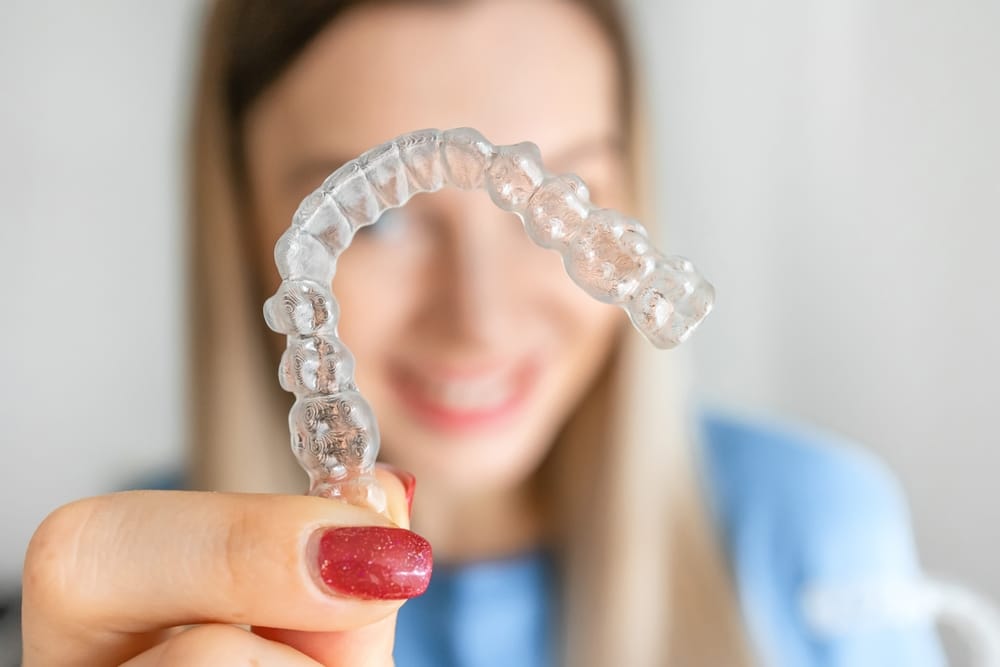
Invisalign handles a broader range of orthodontic cases than many people expect. Mild to moderate crowding, gaps between teeth, overbites, underbites, crossbites, and open bites all fall within its scope. For patients with good overall dental health and tooth misalignment that doesn’t involve severe skeletal issues, clear aligners are a clinically sound alternative to traditional metal braces, with treatment time often comparable to conventional orthodontic treatment.
The limitations are worth knowing upfront. This type of clear aligner is less effective for significant vertical tooth movement, large rotations on certain teeth, or cases where jaw position needs to be corrected rather than just tooth position. Patients with dental bridges or certain implant configurations may also face constraints on what clear aligners can achieve. These aren’t dealbreakers for most orthodontic cases, but they’re the reason a thorough evaluation matters before committing to any treatment plan. An honest assessment of your mouth shape, bite, and alignment determines which outcomes are realistic.
Benefits of Clear Aligners
Discreet Orthodontic Care That Holds Up Under Scrutiny
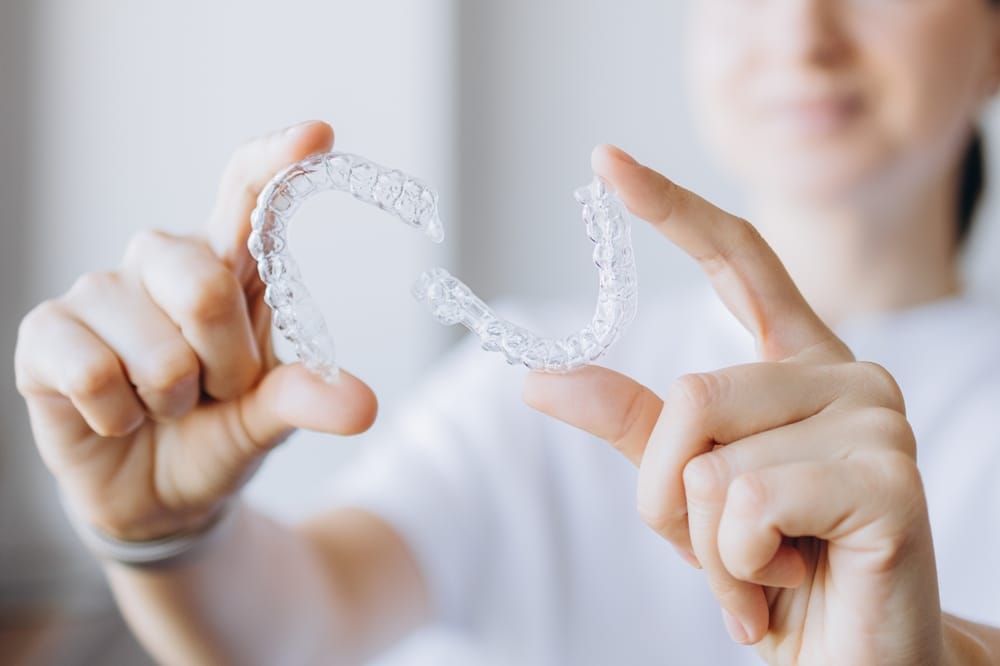
The medical-grade plastic used in Invisalign aligners is transparent enough that most people won’t notice you’re wearing them during conversations, presentations, or social situations. Unlike the metallic color and clunky appearance of traditional braces, clear aligners let you smile naturally without drawing attention to your orthodontic treatment. Adults and teens who need moderate to significant tooth movement especially appreciate that treatment doesn’t announce itself in every interaction.
Eat Anything, Clean Everything
Popping your aligners out before meals means zero dietary restrictions, with no need to avoid popcorn, crusty bread, or anything else that traditional metal braces put off-limits. More importantly, brushing and flossing work exactly as they always have, so plaque doesn’t accumulate around brackets. Patients who finish Invisalign treatment often exit with better oral hygiene habits than when they started, simply because cleaning their teeth was never obstructed.
Comfort That Compounds Over Time
Each new set of aligners produces mild pressure for the first day or two as your teeth begin moving, then settles. Compare that to the recurring soreness of tightening appointments with traditional metal braces, and the difference adds up significantly over 12 to 18 months. The smooth plastic edges won’t scrape your cheeks or gums, and there are no wires to snap or brackets to dislodge mid-treatment.
A Visual Treatment Plan Before You Begin
Cone beam CT imaging and 3D scanning technology at Ocean Valley Dental allow Dr. Murray to map every planned tooth movement before your first aligner is made. You can review a virtual simulation of your expected results during your consultation, which helps set realistic expectations and confirms the treatment plan addresses your actual concerns. That level of pre-treatment transparency isn’t possible with conventional orthodontic cases.
Long-Term Oral Health Improvement
Correcting tooth misalignment does more than improve how your smile looks. Properly aligned teeth are easier to clean, distribute bite forces more evenly, and reduce wear on enamel caused by crowding or gaps. Straight teeth also support healthier gum tissue, which connects directly to broader dental health. The oral health gains from completing Invisalign treatment extend well beyond aesthetics.
What to Expect During Invisalign Treatment
Why Choose Us for Invisalign
Not every dental office approaches Invisalign the same way. Dr. Robert F. Murray, DDS evaluates each case using cone beam CT imaging rather than relying on standard X-rays alone, which is a meaningful difference when treatment planning for complex orthodontic cases where bite depth, root position, and jaw structure all influence how teeth can realistically be moved. That level of diagnostic detail produces treatment plans grounded in your actual anatomy, not assumptions.
Having an in-house lab also changes the patient experience in practical ways. If your aligners need refinement mid-treatment, adjustments don’t require weeks of waiting on an outside manufacturer. Your complete dental health history is factored into every orthodontic decision, which matters when existing restorations or gum health affect how clear aligners should be sequenced. Patients who’ve completed their orthodontic treatment here regularly refer family members back, not because the office oversold the process, but because the results and communication matched what they were told to expect from their first consultation.
Get a Real Look at What Invisalign in Mission Viejo Offers!
Straighter teeth are closer than most patients realize, and seeing the projected outcome before committing to anything is the easiest way to find out. At your consultation, Dr. Robert F. Murray, DDS will walk you through a 3D simulation of your expected results, give you a realistic treatment timeline, and answer every question you have about the Invisalign process. You leave with a clear picture of what’s possible, not a vague estimate.
Ocean Valley Dental’s phone line at 949-831-4655 is the fastest way to get your first appointment on the calendar. If you’d rather do your homework first, our Facebook page has office updates, patient stories, and a closer look at the practice, which is worth browsing before your visit.
FAQs
What happens if I skip wearing my aligners for a day or two?
Missing even a day or two of wear disrupts the gradual pressure that moves your teeth according to the treatment plan. Clear aligners require 20 to 22 hours of daily wear to stay on schedule, and falling short consistently can extend your overall treatment time or cause your current aligner to no longer fit properly. If skipped wear becomes a pattern, your orthodontic treatment may need to be recalibrated with new scans of your mouth.
How do I know if my teeth are moving on track?
Progress check appointments every six to eight weeks are the clearest indicator, as your provider will assess whether your teeth are following the mapped sequence in your treatment plan. Between visits, a well-fitting aligner that seats flush against your teeth without gaps is a good sign that movement is happening as intended. If an aligner feels noticeably loose or uncomfortable before the two-week switch, flag it at your next appointment rather than waiting.
Can Invisalign fix my bite, or just straighten my teeth?
Invisalign treats several bite-related issues alongside tooth misalignment, including overbites, underbites, crossbites, and open bites. The custom-made aligners are designed to address both tooth position and how your upper and lower teeth meet, which affects long-term dental health and jaw comfort. Severe skeletal bite problems may still require additional orthodontic treatment, but many bite corrections that once defaulted to traditional metal braces are now manageable with clear aligners alone.
Will my teeth shift back after Invisalign?
Teeth naturally want to drift back toward their original positions after orthodontic treatment, and this applies to Invisalign and traditional braces alike. Wearing a retainer as directed after completing your final aligner is what holds straight teeth in place long term. Most patients transition to nighttime retainer wear after an initial full-time period, making retention a minor habit rather than a significant commitment.
How is Invisalign fitted without traditional molds?
Rather than using putty impressions of your teeth, Invisalign treatment starts with a digital intraoral scan that captures precise three-dimensional models of your mouth shape in minutes. Those scans feed directly into treatment planning software, which maps tooth movement across every aligner in your sequence. The result is custom-made aligners built to exact specifications, with a more comfortable fitting process and greater accuracy than traditional mold-based methods.